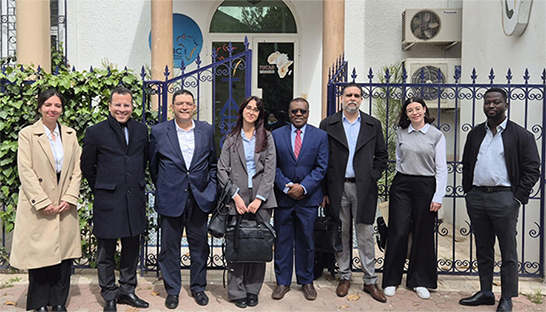
Consultancies support development of Tunisia’s national strategy for public libraries

Tunisia is developing a new national strategy for its public library network, with the aim of strengthening the role of libraries as accessible, inclusive and relevant public services. The initiative, commissioned by the Ministry of Cultural Affairs under the Maghroum’IN programme, is supported by Matine Consulting and Pencils Consulting.
The initiative comes at a time when public libraries are facing changing expectations around access to information, digital services, education and cultural participation. While Tunisia already has an extensive network of public libraries, their future role needs to reflect evolving reading habits, growing digitalisation, territorial inequalities and the needs of younger generations.
The central question of the new Strategy 2026–2032 is how to ensure that libraries remain valuable community institutions while adapting their services to the changing needs of the population. The ambition is to move beyond a network primarily focused on providing access to books towards a more integrated public service that also supports learning, inclusion, information access and cultural engagement.
Building a strategy through consultation and evidence
Launched in March 2026, the study began with a national consultation designed to gather perspectives from across Tunisian society. An online questionnaire invited both regular library users and people who do not visit libraries to share their experiences and expectations. This broader approach is intended to identify barriers to access, understand how libraries are perceived and establish which services could make them more relevant.
The consultation has been complemented by a series of participatory workshops and stakeholder meetings, bringing together institutional representatives, library professionals and sector partners. These exchanges have helped establish a shared understanding of the challenges facing the network, identify strategic priorities and shape the foundations of a future national strategy.
The study also incorporates international benchmarking, examining how public library networks elsewhere are responding to digitalisation, inclusion, lifelong learning and changing cultural practices.
The findings are being translated into an integrated national strategy for 2026–2032. This includes differentiated library models reflecting local needs, strategic priorities, an operational roadmap, governance arrangements and performance-monitoring mechanisms. The work also provides a framework for pilot initiatives and capacity-building activities.
The partners
The Maghroum’IN programme is supported by international partners, including the European Union, the Spanish Agency for International Development Cooperation (AECID) and France Expertise Internationale (FIAP), alongside other cooperation partners involved in the programme.
Two consulting firms have supported the strategic development process. Matine Consulting, a firm based in Tunis, supported the research process and the development of a shared strategic vision. The firm brings its expertise in strategic diagnosis, public-service transformation and the design of implementation frameworks.
Pencils Consulting, a boutique Paris-based management consultancy dedicated to the media and culture sectors, has contributed through quantitative and qualitative research. Covering more than 440 public libraries, its work included analysing administrative and performance data, examining geographical and demographic differences in access, and gathering insights through field observations, consultations and focus groups with professionals and local communities.
The next steps
With the study now entering its final phase, attention is turning towards consolidating the findings and translating the proposed strategic directions into an actionable framework. The next steps will centre on finalising the national strategy, establishing implementation priorities and defining the mechanisms needed to monitor progress.
Ultimately, the initiative seeks to give Tunisia’’ public libraries a clearer role in the country’s cultural and social development – ensuring that the network is not only preserved, but equipped to remain accessible, relevant and responsive to communities through 2032 and beyond.